For decades, the promise of the digital age was simple: more data. Organizations armed employees with dashboards, RSS feeds, and an endless stream of reports. When generative AI arrived four years ago, companies rushed to bolt copilots and chatbots onto existing workflows, hoping that sprinkling AI features across the enterprise would unlock productivity.
As 2026 begins, a different reality is coming into focus.
In a recent EY survey, only 20% of CEOs said AI meaningfully exceeded their expectations last year. Confidence in AI’s ability to reduce headcount has also collapsed—just 24% of CEOs believed it would drive workforce reductions in December 2025, down from 46% at the start of the year.
All of this is unfolding against a tougher macro backdrop. The World Bank expects economic growth to slow to 2.6% in 2026. With geopolitical volatility rising, capital tightening, and margins under pressure, business leaders no longer have the luxury of investing in fragmented experiments.
A shift is underway.
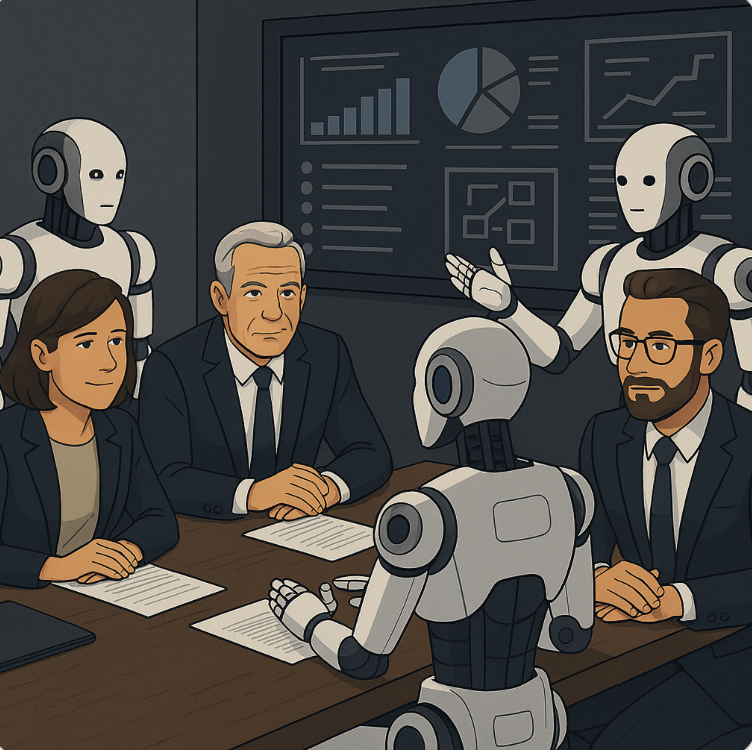
Executives are recognizing that AI can’t remain a bolt‑on tool at the edges of the business. It must become a foundational player—woven into processes, decisions, and value creation across the enterprise.
Welcome to the era of the AI WORKFORCE.
Shattering the "Human Ceiling"
Two forces are colliding inside modern enterprises.
First, the volume and velocity of information have exploded. Legislative shifts, regulatory updates, supply‑chain disruptions, sustainability mandates, pricing signals, and competitive moves change in real time. The turnover of critical information routinely outpaces what even the strongest human teams can absorb, interpret, and act on.
Second, companies today are grappling with a growing knowledge transfer challenge. According to a Deloitte study, the demographic shift toward retirement age has been accelerating. In manufacturing, this “silver tsunami” is causing a significant loss of institutional knowledge. Even where new talents are available, training and upskilling is capital-intensive.
These forces have created a “human ceiling"—no matter how capable your people are, they cannot monitor every domain at every moment. Scaling headcount is hard; scaling expertise is even harder.
To break through, AI can’t simply assist humans—it must multiply their capabilities.
From Generative AI to Impact-Driven Agentic Workforce
Most enterprise AI investments to date have focused on tools that wait for a prompt to help an employee do something a little faster. Useful, yes. Transformative, no.
The real shift underway is toward agentic AI: autonomous, specialized agents that rapidly absorb years of domain data, continuously monitor emerging signals, and take action without being asked.
This is the philosophy behind Industry Intelligence’s AI WORKFORCE. Our AI TEAMMATES are function-specific digital workers trained on 20+ years of market data:
- COMPLY: Continuously tracks public policy changes.
- ORION: Monitors suppliers and supply chain risks.
- EDGE: Surfaces competitive and market-moving signals.
- NOVA: Scouts for intellectual property shifts and disruptive innovations.
- VISTA: Tracks market volatility, headwinds, and growth drivers.
- VORA (Chief of Staff): Synthesizes intelligence into actionable briefings.
They don’t sleep.
They don’t wait for prompts.
They collaborate with each other — and escalate only what matters.
Instead of drowning decision-makers with alerts, they deliver signals, context, implications and priority.
Speed Provides Signals; Context Creates Advantage
An efficient news bot might flag a factory closure, a hiring announcement, or a rival’s earnings release as isolated events. Industry Intelligence’s AI TEAMMATES go further by connecting these dots into a unified picture that reveals what’s actually unfolding in the market.
Consider the following signals:
- EDGE observes a competitor reporting weak quarterly earnings while simultaneously investing in factory line conversions and announcing new engineering hires.
- NOVA scans the competitor’s patent activity and identifies a pending patent for a high‑yield production method.
- VORA synthesizes the findings from EDGE and NOVA, concluding that the pattern points to deliberate strategic retooling.
Individually, these signals seem routine. Together, they expose a compounding threat.
VORA reframes the rival’s earnings dip not as a stumble, but as a low‑cost offensive quietly taking shape.
The outcome? This synthesis equips the client’s executive team to preemptively plan for a shifting competitive landscape—anticipating a likely scenario in which the rival is repositioning to become a low‑cost leader.
Why 24/7 Monitoring Is No Longer Optional
Consider the math:
- Hundreds of suppliers
- Thousands of legislative and regulatory updates
- Multiple jurisdictions
- Real-time expectations from all your stakeholders
A human team cannot monitor everything without burning out or missing critical changes. But a digital workforce can.
Our AI TEAMMATES are built to monitor the market 24/7, translate signals into business impact, and surface risks before they become surprises.
Outcomes, Not Experiments
EY’s CEO survey results deliver a clear message: chief executives need outcome-based AI.
That’s why our AI WORKFORCE model matters.
- Faster time from signal to strategy
- Earlier detection of risk and opportunity
- Fewer blind spots across compliance, markets, and supply chains
- Intelligence becomes an active defense system—anticipating risk, revealing intent, and enabling decisive action.
The result? Your enterprise has a more effective human team that can finally focus on making smart decisions — not data wrangling.
The Bottom Line: Don’t Buy Another Tool
2026 isn’t about doing more with less.
It’s about doing more with intelligence at scale.
The winners of this decade will be the companies that find the right workforce mix: humans driving strategy, supported by trained AI experts executing at a scale humans cannot match.
At Industry Intelligence, we’ve built the AI WORKFORCE for this reality.
We don’t sell tools that wait.
We deliver teammates that work.
Don’t buy another AI feature.
Hire a workforce.
Book an appointment with us: tell us about your business challenges and explore the possibilities with Industry Intelligence’s AI WORKFORCE.