February 7, 2025 (Chemical Industry Digest (India)) –
Abstract
The emerging trend of upcycling in the personal care industry, highlights the potential of food and beverage waste as a source of sustainable ingredients. The article discusses the benefits, challenges, and opportunities for brands to incorporate upcycled ingredients into products, paving the way for a circular beauty revolution.
Introduction
The personal care industry is undergoing a major shift towards sustainability, with the second wave focusing on upcycling ingredients, particularly from food and beverage waste. Building on the initial move towards natural and organic ingredients, upcycling offers a fresh opportunity to transform discarded materials into valuable, eco-friendly ingredients for cosmetics and personal care products. This emerging trend, exemplified by both global and indie brands, not only addresses environmental concerns but also taps into the growing demand for circular beauty solutions. In this article, we explore how upcycling is reshaping the personal care landscape and the potential benefits for both brands and consumers.
Sustainability 2.0
The first wave of sustainability in the personal care industry saw the transition from synthetic to natural/ organic ingredients derived from plants, seeds and flowers. Major personal care brands aimed to increase their sustainability quotient, reduce their carbon footprint and cater to the consumer’s growing need for eco-friendly products resulting in a healthy mix of synthetic and natural products in their portfolio. This transition also witnessed the inclusion of superfoods such as avocado, green tea, chia seeds, etc in personal care formulations.
However, the second paradigm shift in sustainability is upcycling (especially from food and beverage waste) which has already caught on in other industries like textiles and apparel, animal feed and food industry. Several Indian apparel brands such as Doodlage, Ka-Sha and
Upcycling is a more recent buzzword and a niche space in the personal care industry which has gained traction over the past few years and epitomizes circular beauty in the true sense of the word. Companies like P&G,
This is a revolutionary period for personal care companies as lines defining the food and beauty industry start to blur. You should decide whether you want to be a part of Sustainability 2.0 or just watch from the sidelines and lose out on this exciting endeavour to become circular beauty brands.
Upcycling – Need of the Hour
According to the
The Revolutionary Aspect of Upcycling
Upcycling is the process of transforming by-products, waste materials and discarded objects into new products. Food and beverage waste are the main source of materials that can be upcycled into personal care ingredients as they contain actives which offer beneficial properties for the skin.
Common sources of Food and Beverage Waste that can be Tapped
The most common personal care ingredient active which is extracted from food and beverage waste is polyphenols. The polyphenol content in citrus fruit wastes like orange and lemon peel has been found to be higher than the actual fruit.

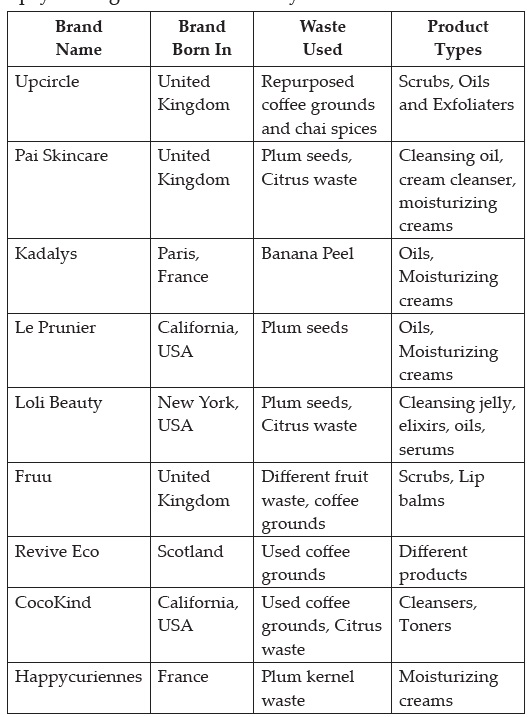
Indie Beauty Brands Upcycling Waste into Conscious Skincare Products
Big Brands and their foray into Upcycling in Personal Care
* Keracol, a spin-off from Leeds university helped Marks & Spenser (M&S)to develop their Wine Waste Pure range from leftover grape skin sourced from the supermarket’s wine makers. This range consists of natural dyes and haircare products from blackcurrant pulp.
*
* Body Shop sources overripe, squished bananas and wonky carrots which retailers refuse to sell as they lack aesthetic appeal. These are used in their Carrot facial skincare and Wonderfully Wonky Banana collection. It also upcycles ingredients like almond milk from nut waste and rose petals discarded by perfume industries in their personal care products
* Lush has launched vegan protein shampoos made from aquafaba (chickpea brine). It shares protein and saponin properties with egg white and can be a potent ingredient in haircare products.
* Specialty ingredient manufacturers like
Barriers for Adopting Upcycled Ingredients
Despite the potency of ingredients being higher in certain food and beverage waste, there is negative consumer perception associated with products derived from food waste as opposed to virgin green ingredients.
Consumers feel there will be a dip in quality and potency of the ingredients and products will not be attractive to buy owing to the ‘ick’ factor. There is also a fear of microbial contamination associated with food waste which might cascade into the final product.
The marketing of these products by brands is very important to sway consumers. Rejigging the terminology will help such as food by-products, co-products, derivatives to attract consumers and positively explain the benefits of these products.
Conclusion
Upcycling presents a truly exciting opportunity for personal care companies to amp their sustainability game and become circular brands. FMCG brands and Personal care companies can follow a fourpronged approach to incorporate upcycling in their sustainability program:
* Identify in-house food and beverage waste streams and leverage them for their personal care product lines
* Partner with or source from ingredient companies who are developing ingredients from food and beverage waste.
* Collaborate with research organizations, academic institutions, bio-technology companies, form a symbiotic relationship and create these ingredients from scratch.
* Actively participate in M&As and acquire indie brands who are developing product lines based on waste sources.
Brands can also charge a premium on the products which contain these upcycled ingredients. Upcycling is still in the nascent phase but it is a trend that is here to stay. FMCG and Personal Care companies should quickly jump on this bandwagon and capitalize this additional revenue stream or potential lucrative opportunity to stay one step ahead of their competition.
Upcycling is a more recent buzzword and a niche space in the personal care industry which has gained traction over the past few years and epitomizes circular beauty in the true sense of the word.
* All content is copyrighted by Industry Intelligence, or the original respective author or source. You may not recirculate, redistribute or publish the analysis and presentation included in the service without Industry Intelligence's prior written consent. Please review our terms of use.